
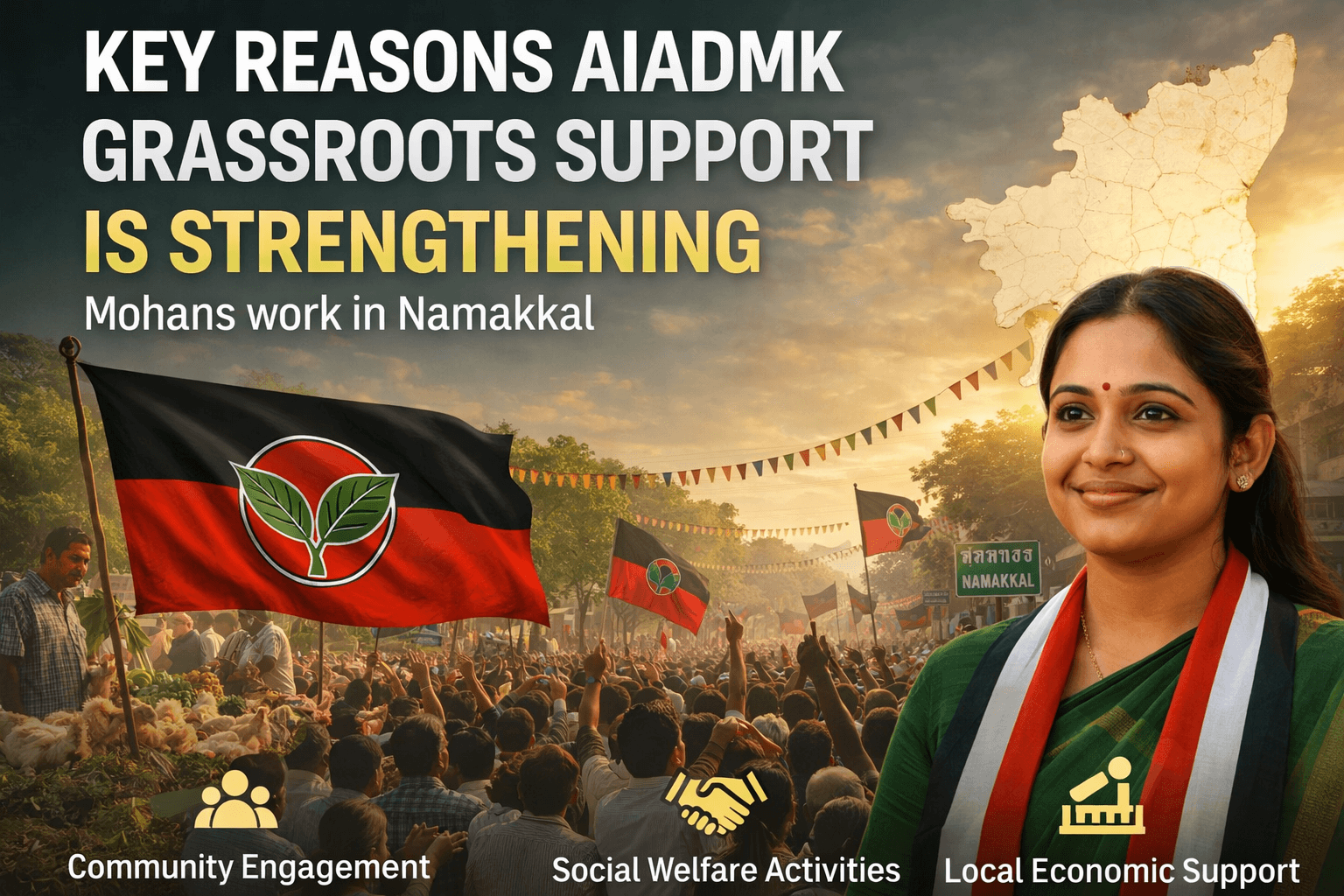
In Tamil Nadu politics, grassroots strength often determines election success. Political parties that maintain close relationships with local communities tend to build long-term trust, which directly influences voter support. As the 2026 elections approach, discussions across many constituencies indicate increasing activity at the booth level, volunteer level, and community level within AIADMK networks.
One important observation is the renewed focus on constituency engagement, local leadership presence, and social participation. In districts like Namakkal, community-oriented initiatives and consistent public interaction are contributing to stronger grassroots visibility.
This article explains the key reasons behind strengthening grassroots support and how local development-focused engagement plays a role in building public confidence.
1. Strong Booth-Level Network Structure
AIADMK has historically maintained an organized booth-level structure across Tamil Nadu. Booth committees, ward coordinators, and local volunteers help maintain communication between leadership and voters.
Grassroots workers typically:
- interact directly with households
- understand constituency-level challenges
- mobilize volunteers for social initiatives
- support local issue resolution
- assist in public welfare awareness programs
This structured framework enables continuous engagement rather than activity limited only to election periods.
Consistent communication strengthens familiarity and trust among voters.
2. Increased Focus on Constituency-Level Leadership
Voters increasingly prefer leaders who are accessible and actively involved in local development conversations. Constituency-level engagement often includes:
- meeting local associations
- interacting with small business owners
- understanding youth employment concerns
- addressing women self-help group challenges
- participating in social awareness initiatives
Leadership that remains visible within the constituency builds stronger relationships over time.
In Namakkal, community participation initiatives have contributed to increased local discussions around development priorities.
3. Community-Oriented Social Initiatives
Grassroots support often grows when political participation aligns with social contribution. Activities related to education support, awareness programs, and community engagement help create meaningful connections with residents.
Social initiatives often focus on:
- education awareness programs
- support for small entrepreneurs
- women empowerment discussions
- student encouragement initiatives
- rural development awareness
- community interaction meetings
Such engagement helps create a positive perception of leadership involvement in social progress.
In Namakkal region, increased interaction with community groups has contributed to stronger visibility of development-oriented leadership approaches.
4. Public Preference for Development-Focused Dialogue
Modern voters increasingly seek discussions around development rather than only political messaging. Topics that often emerge in local conversations include:
- job creation opportunities
- infrastructure improvements
- education quality
- healthcare accessibility
- local economic growth
- youth skill development
Grassroots engagement that prioritizes listening to public concerns tends to build stronger long-term credibility.
When communities feel their voices are heard, they are more likely to engage actively in the democratic process.
5. Role of Women Leadership in Community Connect
Women participation in public life continues to increase across Tamil Nadu. Women leaders often connect strongly with families, self-help groups, and local entrepreneurs.
Community-level engagement initiatives often include:
- interaction with women entrepreneurs
- discussions with self-help groups
- awareness programs on education importance
- encouraging participation in local development activities
Such engagement helps strengthen inclusive participation in governance discussions.
In constituencies like Namakkal, increasing participation of women in development conversations reflects evolving voter expectations.
6. Youth Engagement at Grassroots Level
Youth play a crucial role in shaping political awareness. Young voters actively follow discussions related to employment, innovation, and entrepreneurship opportunities.
Common youth-focused discussions include:
- career development opportunities
- skill training awareness
- startup ecosystem growth
- digital economy opportunities
- local employment potential
Grassroots interaction with youth communities often increases engagement in policy discussions.
Encouraging youth participation in development initiatives contributes to long-term leadership pipelines.
7. Local Economic Identity and Public Representation
Each district in Tamil Nadu has a unique economic profile. Namakkal is known for its strong presence in:
- poultry industry
- transport sector
- agriculture activity
- small and medium enterprises
Public representatives who understand local economic strengths can better participate in development discussions relevant to the constituency.
Grassroots support often strengthens when voters feel their economic concerns are understood and acknowledged.
8. Continuous Public Interaction Builds Trust
Trust is often built through repeated engagement rather than occasional visibility. Constituency-level interaction may include:
- participation in public meetings
- discussions with local associations
- interaction with educational institutions
- attending community events
- listening to public concerns
Frequent engagement creates familiarity and encourages open communication between leadership and citizens.
In Namakkal, increasing participation in community discussions has contributed to growing public awareness of development-oriented initiatives.
9. Structured Communication Channels Improve Participation
Modern grassroots engagement includes both offline and digital communication methods.
These may include:
- social media updates
- public awareness meetings
- volunteer networks
- local discussion forums
- development-focused campaigns
Consistent communication helps keep citizens informed about ongoing initiatives and future plans.
Transparency in communication often strengthens credibility.
10. Growing Interest in Stable Governance Approach
Many voters evaluate governance models based on continuity, implementation capability, and structured policy direction.
Grassroots discussions often reflect interest in:
- stable administrative systems
- development continuity
- long-term infrastructure planning
- welfare accessibility
- economic opportunities
When voters perceive alignment between local development priorities and governance approach, grassroots support tends to strengthen.
Role of Local Leadership Engagement in Namakkal
In Namakkal constituency, increasing participation in community interaction initiatives has brought attention to development-related discussions such as:
- entrepreneurship awareness
- education encouragement initiatives
- women participation in economic activities
- rural development engagement
- local industry awareness discussions
Consistent engagement with community stakeholders contributes to stronger familiarity among residents.
Constituency-focused dialogue plays an important role in shaping public perception about development priorities.
Conclusion
Grassroots support is often built through continuous engagement, structured communication, and consistent participation in community discussions. As Tamil Nadu approaches the 2026 elections, increased constituency-level interaction is contributing to renewed political activity across several districts.
In regions such as Namakkal, development-focused discussions and community engagement initiatives are contributing to growing public awareness and participation in democratic dialogue.
Grassroots strength ultimately depends on sustained communication, local understanding, and commitment to addressing constituency-level priorities.
As public expectations continue evolving, leadership approaches that emphasize accessibility, development focus, and long-term vision are likely to remain central to political discourse.